Showing posts with label health. Show all posts
Showing posts with label health. Show all posts
Wednesday, February 17, 2010
If Travel Worked Like Healthcare
If Travel Worked Like Healthcare is a shockingly accurate portrayal of health care in the USA, complete with the hassle of arranging every portion of the trip via fax, calling numerous other providers, and being charged extraordinary amounts of money for simple procedures. Until Obama gets the reforms pass, I´m so glad to be living in Europe.
(From ) Youtube

Friday, February 12, 2010
Atul Gawande on the Daily Show
| The Daily Show With Jon Stewart | Mon - Thurs 11p / 10c |
| Atul Gawande | |
Friday, January 8, 2010
Welcome to Cancerland: A Mammogram Leads to a Cult of Pink Kitsch
 In honor of today's Facebook flurry of bra-color status updates and the ongoing controversy, here is an article from the perspective of a patient:
 Welcome to Cancerland: A Mammogram Leads to a Cult of Pink Kitsch is an article by Barbara Ehrenreich about the commercialization of breast cancer.
"What sustained me through the "treatments" is a purifying rage, a resolve, framed in the sleepless nights of chemotherapy, to see the last polluter, along with, say, the last smug health insurance operative, strangled with the last pink ribbon. Cancer or no cancer, I will not live that long of course. But I know this much right now for sure: I will not go into that last good night with a teddy bear tucked under my arm."
Love,
The Rememberance Bear
(From TJ's friend Laura, picture from abc news)
Wednesday, October 14, 2009
391: More Is Less

Also the medscape news alert tells me that, "The Senate Finance Committee today passed a massive healthcare reform bill — mostly along partisan lines — that would eventually reduce the ranks of the uninsured by more than half." Whee!
Edited for accurate links.
(From my iPod subscription)Monday, October 12, 2009
Homeopathy & Nutritionists vs Real Science!
Homeopathy & Nutritionists vs Real Science! is a stand-up routine by Dara O'Briain about the public understanding of biological and health science.
Basically, teehee. Especially after my CAM class on homeopathy. For the uninitiated, that's a field whereupon people think that "like cures like." They make healing potions by diluting something to or beyond avogadro's number... and shake the hell out of the bottle (calling it "succussion"). Then they call that an elixir and sell it to you.
The routine is precious.
(From Boing Boing)Tuesday, September 22, 2009
Will Ferrell stands up for the real health care victims
Will Ferrell stands up for the real health care victims is a pro-health care reform satire PSA.
It features Will Ferrell, Jon Hamm, Olivia Wilde, Thomas Lennon, Robert Ben Garant, Masi Oka, Jordana Spiro, Linda Cardellini, and Donald Faison. Pretty heavy-handed, pretty awesome.
(From Chels)
Thursday, September 10, 2009
Obama Health Reform Address Close - "The Character Of Our Country"
Obama Health Reform Address Close - "The Character Of Our Country" is the Youtube video clip of the last bit of Obama's Health Care Reform Speech that aired on C-Span.
If you didn't swoon, you better get that checked out--you don't have a heart. Fact. I'm going to be a great doctor.
PS: Who is the speechwriter? I would like a date with them, thx.
(From RE, TV)
If you didn't swoon, you better get that checked out--you don't have a heart. Fact. I'm going to be a great doctor.
PS: Who is the speechwriter? I would like a date with them, thx.
(From RE, TV)
Wednesday, July 15, 2009
Why are we so fat?
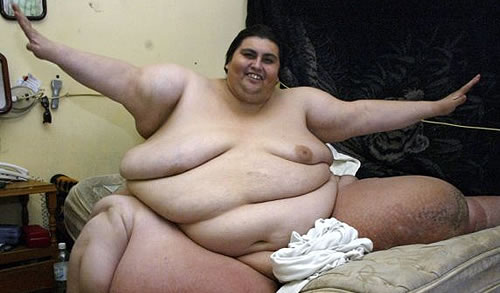 Why are we so fat? is a New Yorker article by Elizabeth Kolbert. She talks about the global fat epidemic, as evinced in the National Health and Nutrition Examination Surveys, by the Centers for Disease Control and Prevention.
A few awesome quotes in chronological order (but without segues):
"In just ten years, they showed, Americans had collectively gained more than a billion pounds. 'If this was about tuberculosis, it would be called an epidemic,' another researcher wrote in an editorial accompanying the report."
"Human infants are unusually portly; among mammals, only hooded seals have a higher percentage of body fat at birth. (Presumably, babies need the extra reserves to fuel their oversized brains.)"
"Relative to other goods and services, food has got cheaper in the past few decades, and fattening foods, in particular, have become a bargain. Between 1983 and 2005, the real cost of fats and oils declined by sixteen per cent. During the same period, the real cost of soft drinks dropped by more than twenty per cent."
"The correlation between cost and consumption is pretty compelling; as Finkelstein notes, there’s no more basic tenet of economics than that price matters. But, like evolution, economics alone doesn’t seem adequate to the obesity problem. If it’s cheap to consume too many calories’ worth of ice cream or Coca-Cola, it’s even cheaper to consume fewer."
"Kessler spends a lot of time meeting with (often anonymous) consultants who describe how they are trying to fashion products that offer what’s become known in the food industry as 'eatertainment.' Fat, sugar, and salt turn out to be the crucial elements in this quest: different 'eatertaining' items mix these ingredients in different but invariably highly caloric combinations. A food scientist for Frito-Lay relates how the company is seeking to create 'a lot of fun in your mouth' with products like Nacho Cheese Doritos, which meld 'three different cheese notes' with lots of salt and oil. Another product-development expert talks about how she is trying to 'unlock the code of craveability,' and a third about the effort to 'cram as much hedonics as you can in one dish.'”
"The World Health Organization has come up with more than three dozen actions that governments could take to encourage better eating and fitness; these include imposing a 'fat tax' on caloric snacks, improving health education, regulating food and beverage advertising, limiting the foods available in public facilities, and insuring access to sidewalks and bike paths."
Click through for the article, which has actual paragraphs and makes more sense. (Having been edited by a proper editor, and all.)
(From Guy)
Saturday, June 20, 2009
The Cost Conundrum
 The Cost Conundrum is a New Yorker piece by Dr. Atul Gawande published at the beginning of this month. It's a good article. The piece, which has been covered on Fresh Air this week, has purportedly become mandatory reading for White House staffers.
 In it, Dr. Gawande discusses the peculiarities of our health care system, contrasting areas with high cost, poor-quality health care (such McAllen, TX) versus areas that have low cost, high quality care (Mayo, Grand Junction). The difference is in part cultural, and in part that there is someone at the helm working toward that goal. What's interesting about the article is that so far, the debate has largely been about single-payer insurance versus multiple, private versus government--but Atul states these arguments are neglecting the most important point--we need a contractor, a person actively working to lower costs while increasing quality:
"Providing health care is like building a house. The task requires experts, expensive equipment and materials, and a huge amount of coördination. Imagine that, instead of paying a contractor to pull a team together and keep them on track, you paid an electrician for every outlet he recommends, a plumber for every faucet, and a carpenter for every cabinet. Would you be surprised if you got a house with a thousand outlets, faucets, and cabinets, at three times the cost you expected, and the whole thing fell apart a couple of years later? Getting the country’s best electrician on the job (he trained at Harvard, somebody tells you) isn’t going to solve this problem. Nor will changing the person who writes him the check.The way I read this article, Atul seems to be asking for a Health Care Czar, a contractor in charge of lowering costs, increasing quality, and managing the totality of health care for the country:This last point is vital. Activists and policymakers spend an inordinate amount of time arguing about whether the solution to high medical costs is to have government or private insurance companies write the checks. Here’s how this whole debate goes. Advocates of a public option say government financing would save the most money by having leaner administrative costs and forcing doctors and hospitals to take lower payments than they get from private insurance. Opponents say doctors would skimp, quit, or game the system, and make us wait in line for our care; they maintain that private insurers are better at policing doctors. No, the skeptics say: all insurance companies do is reject applicants who need health care and stall on paying their bills. Then we have the economists who say that the people who should pay the doctors are the ones who use them. Have consumers pay with their own dollars, make sure that they have some “skin in the game,” and then they’ll get the care they deserve. These arguments miss the main issue. When it comes to making care better and cheaper, changing who pays the doctor will make no more difference than changing who pays the electrician. The lesson of the high-quality, low-cost communities is that someone has to be accountable for the totality of care. Otherwise, you get a system that has no brakes. You get McAllen."
...
"Dramatic improvements and savings will take at least a decade. But a choice must be made. Whom do we want in charge of managing the full complexity of medical care? We can turn to insurers (whether public or private), which have proved repeatedly that they can’t do it. Or we can turn to the local medical communities, which have proved that they can. But we have to choose someone—because, in much of the country, no one is in charge. And the result is the most wasteful and the least sustainable health-care system in the world."
...
"As America struggles to extend health-care coverage while curbing health-care costs, we face a decision that is more important than whether we have a public-insurance option, more important than whether we will have a single-payer system in the long run or a mixture of public and private insurance, as we do now. The decision is whether we are going to reward the leaders who are trying to build a new generation of Mayos and Grand Junctions. If we don’t, McAllen won’t be an outlier. It will be our future."
PS: I like that little nod to Malcolm Gladwell at the end. And that diaeresis over the ö in coordination tickles me... it's just New Yorker whimsical.
PPS: Kottke points to a follow-up from Atul's address to the University of Chicago, Pritzker School of Medicine.
(From Margaret, that New Yorker I bought at the airport, the SF Bay Area's 88.5FM)
Subscribe to:
Posts (Atom)